This aquatic plant originates in South America and is a weed that can wreak havoc in waterways and lakes in some countries because it is an extremely fast grower. Here in a small pond in Kent Ridge Park its function is ornamental and should it threaten to enshroud the entire pond, its spread can easily be controlled.  The flowers are lilac in colour and each petal sports a yellow heart design making them very attractive and appealing to photographers as well as bees. I had originally labelled these flowers as "Eichhornia crassipes" and found out later that they are Eichhornia azurea or commonly known as the Peacock water hyacinth. The water level in the pond appeared to have receded a little as I was able to examine this bunch of flowers at very close range without stepping on water.
The flowers are lilac in colour and each petal sports a yellow heart design making them very attractive and appealing to photographers as well as bees. I had originally labelled these flowers as "Eichhornia crassipes" and found out later that they are Eichhornia azurea or commonly known as the Peacock water hyacinth. The water level in the pond appeared to have receded a little as I was able to examine this bunch of flowers at very close range without stepping on water. I can see that it is a very hardy plant because the leaves are strong and sturdy and the flowers are upright and hardy.
  It was great to have come across these lovely blooms.

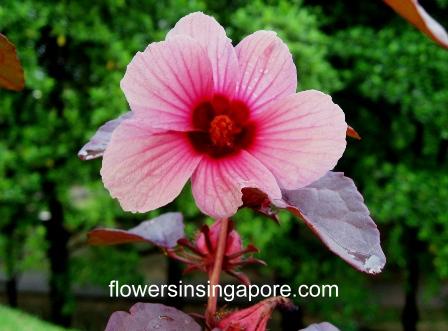
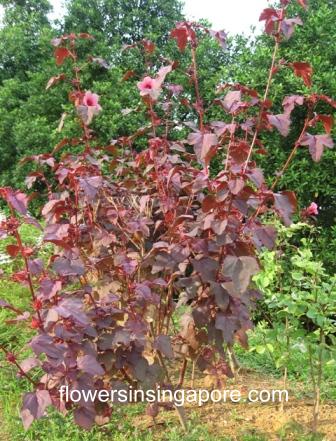
 Hibiscus flowers are typically red, pink, orange, yellow in colour. So I was pleasantly surprised when I was taking a walk around the neighbourhood one day and came across this lilac coloured hibiscus planted outside one of the houses I passed by. When I searched the internet resources on hibiscus flowers, I realised that there are quite a few types of hibiscus plants with flowers that are of varying shades of purple. I have not found the name for this one yet.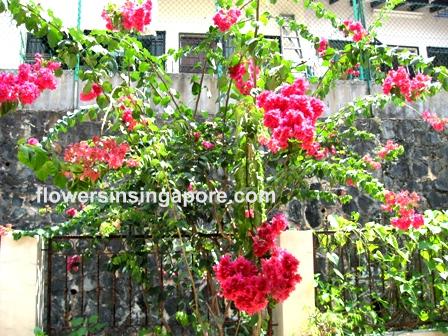
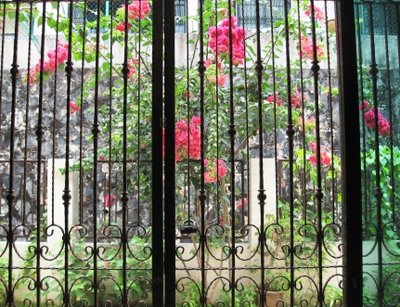 What joy at home to sit and gaze
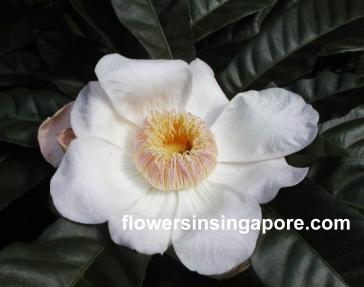 There is nothing that can be compared with the ability to see a real flower, to touch it and feel the softness of its petals and to drink in the beauty of its colours and form. When I first saw the fruits of this plant in West Coast Park a few years I did not know what the flower had looked like.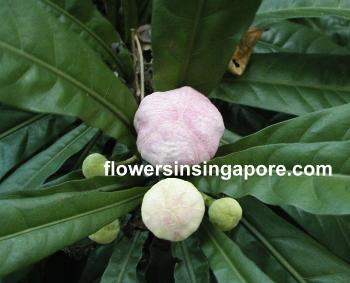
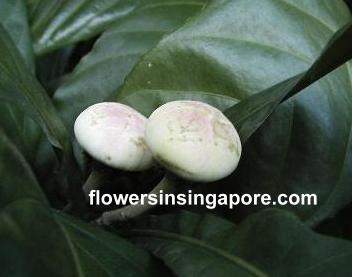 Then I saw the fruits in the Botanical Gardens a second time with their lovely flowers and was just interested in photographing it. There was no necessity then to know the name. But now there is and I found out that it is called the Gustavia superba.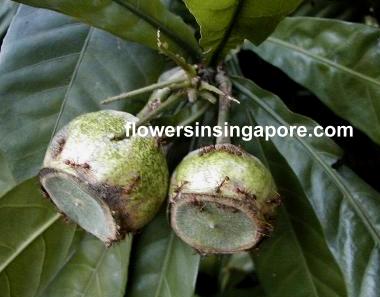
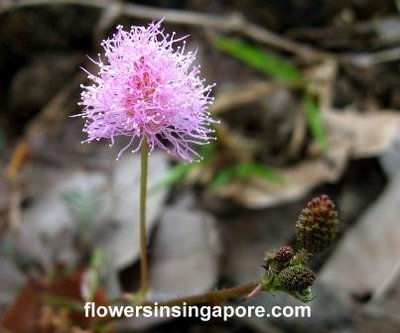
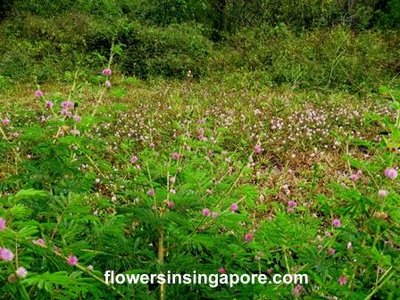 When I saw this patch of mimosa right next to a road with a bus-stop across, I stepped into their midst and for the first time took an ardent interest in the flowers, buds and pods and discovered parts of the plant I had never seen before. There were a few yellow flowers that looked like they belonged to the same family as the pink ones and I cannot identify it for sure. But from my search on the internet, the yellow flowers seemed to look like a plant called Acacia dealbata (Silver wattle) that originates in Australia.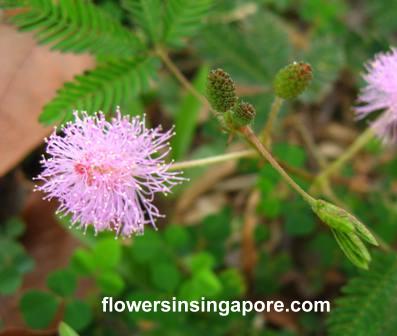
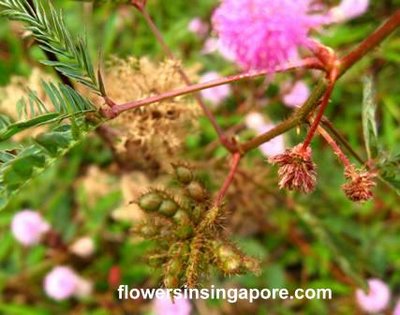 I found out from one of the books I have that this yellow version of the mimosa flower belongs to the Neptunia Plena or commonly known as Aquatic sensitive plant. It originates in Tropical America.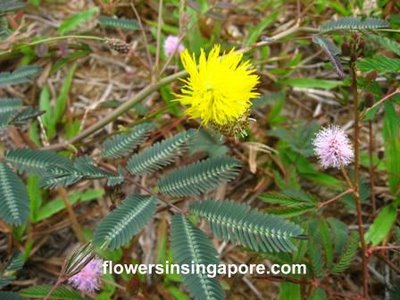

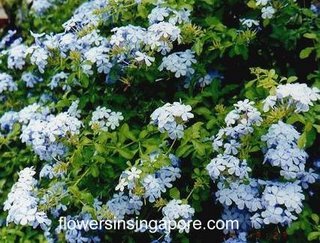

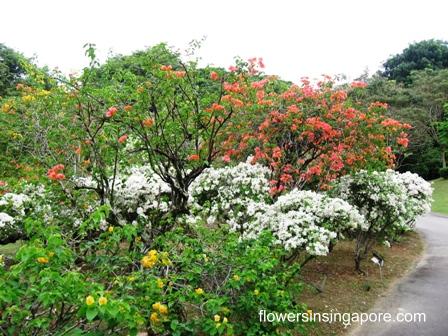
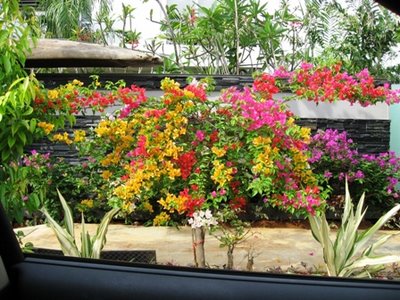
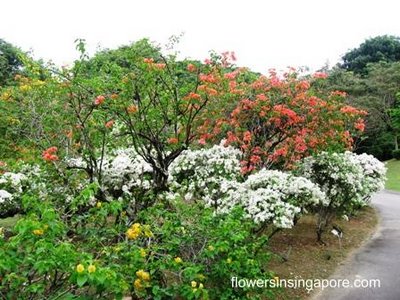 At the Economic Garden, the bougainvillas were blooming profusely.
 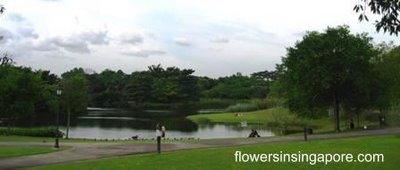 The garden was peaceful and quiet on a weekday afternoon. Parts of the garden reminds me of the gardens in UK in summer.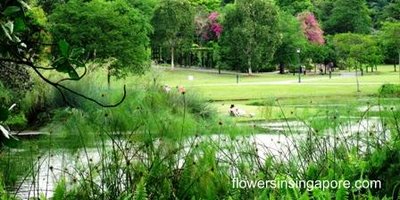
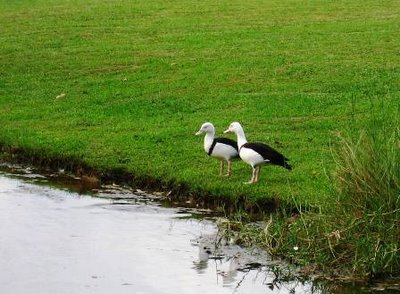 The looked and behaved like ducks.
 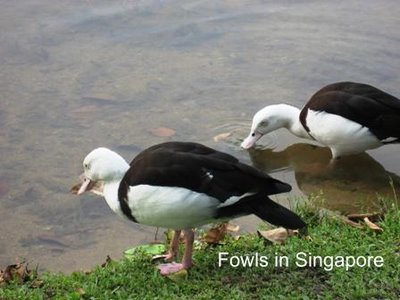 But these ducks do not quack! What ducks are these? By chance I came across a book on ducks at the National Library that had a picture of this duck. I found out that it was a Radjah Shelduck that is found in Australia. Did they fly all the way here or were they flown here as a gift from Australia to Singapore? More information could be found in Wikipedia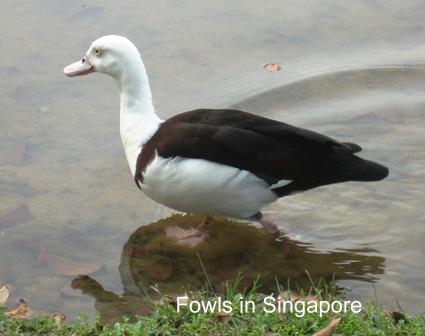
 I promise to upload more photos of this flower to show how I went wild with my camera when I chanced upon these flowers, most of which were taken with the right hand in control of the camera and the left hand holding my handphone to my ear as I chatted with a friend who happened to call at that time. I have never enjoyed multitasking so much before, never mind what the joggers and other park visitors thought of me. I only hope that after I left, they would take an interest in these lovely flowers if only because someone else (like me) found them refreshingly beautiful against the backdrop of the Lower Peirce Reservoir.